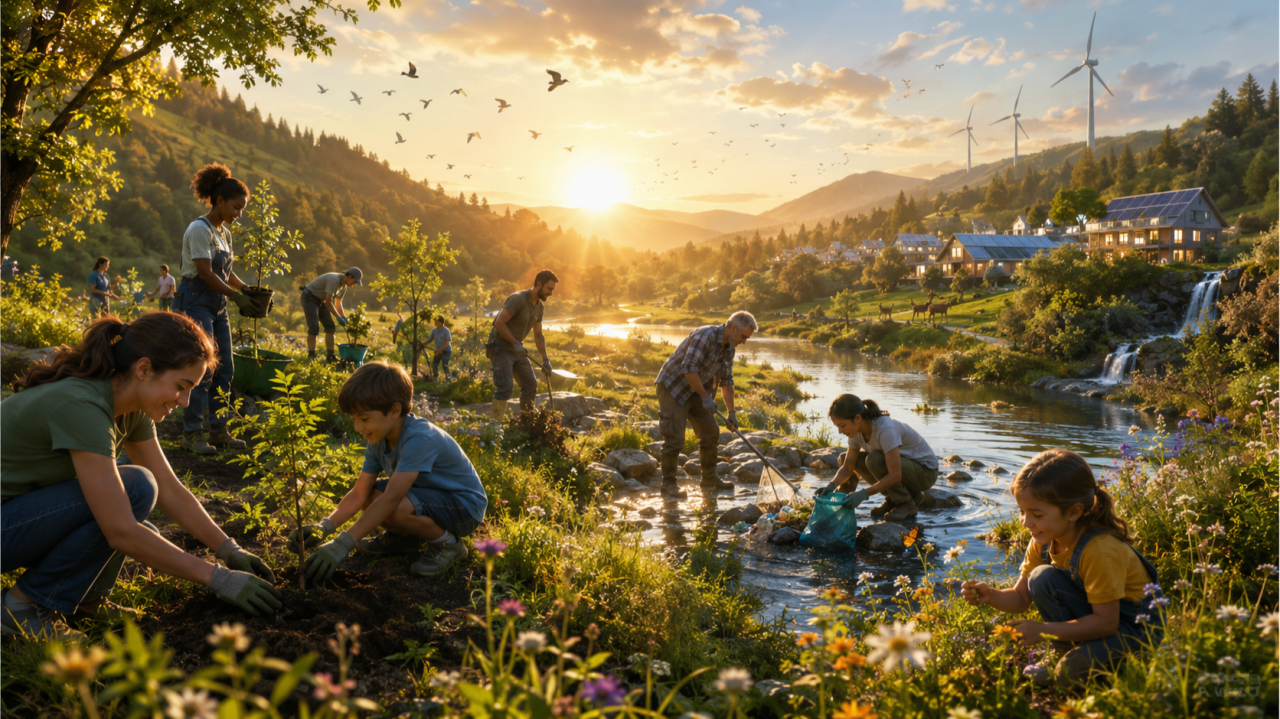
Every year, World Environment Day reminds us that protecting the planet is not an abstract environmental cause. It is a human responsibility. It is about health, water, food, dignity, economic stability, and the right of future generations to inherit a livable world.
The theme of World Environment Day 2026 — “Inspired by Nature. For Climate. For Our Future” — arrives at a critical moment. UNEP has emphasized that nature is not optional; it is central to climate resilience and to humanity’s collective future. But the question today is not only whether we care about the environment. The question is whether we are willing to act fast enough.
Climate change is already affecting human beings in direct and measurable ways. The IPCC has concluded that climate change has caused adverse impacts on human health, livelihoods, food security, water systems, infrastructure, and social equity. Urban areas are especially exposed, with rising heat extremes affecting health, transportation, sanitation, energy systems, and basic services.
The World Meteorological Organization’s State of the Global Climate 2025 report confirms that 2015–2025 were the hottest 11 years on record, with 2025 ranking as the second or third hottest year ever recorded, at around 1.43°C above pre-industrial levels. The report also highlights that extreme heat, heavy rainfall, tropical cyclones, and other climate events are already disrupting societies and economies.
This means climate change is not only about polar ice, forests, or oceans. It is about children breathing polluted air, families losing homes to floods, farmers watching crops fail, hospitals facing heat emergencies, and communities competing for increasingly scarce water.
How Humans Could Be Affected Shortly
In the near future, the most serious impacts will likely be felt through five interconnected pressures.
- First, heat will become a public health crisis. More frequent and intense heatwaves will increase dehydration, cardiovascular stress, kidney problems, and heat-related deaths. Outdoor workers, elderly people, children, and low-income communities will be the most exposed.
- Second, water insecurity will intensify. Droughts, declining aquifers, irregular rainfall, and overburdened water infrastructure will affect cities, agriculture, industry, and public health. In many regions, access to water may become one of the defining social and economic challenges of this decade.
- Third, food systems will become more fragile. Extreme heat, drought, flooding, and shifting seasons can reduce crop yields, increase food prices, and destabilize supply chains. Climate stress does not remain local; it moves through trade, inflation, migration, and social instability.
- Fourth, energy systems will face greater pressure. As temperatures rise, demand for cooling increases. At the same time, grids may become more vulnerable to storms, wildfires, and peak demand. Without resilient energy planning, climate change can create a dangerous cycle: more heat, more energy demand, more emissions, and more system stress.
- Fifth, mental health and social stability will be affected. Climate anxiety, displacement, disaster recovery, loss of livelihoods, and uncertainty about the future are already shaping human behavior. The IPCC has recognized that climate change has adversely affected both physical and mental health.
Recent warnings about a possible strong El Niño in 2026 add further urgency. The World Meteorological Organization has warned that El Niño could raise global temperatures and intensify droughts, heatwaves, heavy rains, and hurricane activity in several regions. This does not mean every disaster is caused by climate change alone, but climate change increases the risk, intensity, and consequences of extreme events.
Acting Faster Is Not a Burden — It Is Protection
Too often, climate action is presented as a cost. In reality, delayed action is the greater cost.
Every year of delay means more infrastructure damage, higher insurance costs, more emergency spending, greater health burdens, deeper water stress, and fewer options for adaptation. Acting faster allows communities, companies, and governments to move from reaction to prevention.
The solutions are already known: renewable energy, water efficiency, decentralized water production, energy storage, smart energy management, resilient agriculture, nature-based restoration, cleaner transportation, and better urban planning. The challenge is no longer technological imagination. The challenge is speed, coordination, and political will.
For the private sector, this means climate resilience must become a core business strategy, not a public relations message. For governments, it means accelerating permitting, financing, and deployment of infrastructure that protects people. For communities, it means demanding practical solutions that reduce vulnerability now.
The Responsibility to Future Generations
Future generations should not inherit Environment Day as a memorial for what humanity failed to protect. They should inherit it as a celebration of what humanity had the courage to save.
They deserve rivers that still flow, cities that can breathe, food systems that can sustain them, and technologies designed around resilience rather than extraction. They deserve more than promises. They deserve action taken in time.
Climate change is testing our generation’s capacity for responsibility. We are the first generation with enough scientific evidence to fully understand the danger, and possibly one of the last with enough time to change the trajectory.
The best way to honor Environment Day is not only to plant a tree or express concern. It is to accelerate solutions in infrastructure.
Because the future will not ask whether we knew. It will ask whether we acted fast enough.